Start here · a little extra help
Shape gently, do not force
Blocking is a finishing process that lets fabric settle into a more even shape. It may involve carefully wetting the fabric or using another fibre-appropriate method, then leaving it supported while it dries. It cannot reliably fix a missing stitch or turn the wrong size into the right size.
Read the yarn’s care instructions and test the method on a swatch first. Heat can damage fibres, especially synthetics, and hot steam can burn. For a beginner, start only with a care-label-approved wet method and gentle shaping; ask an adult for help with pins or heat equipment.
Your small practice goal
Measure a small sample before and after a suitable wash and dry. Notice whether it grows, shrinks or simply lies flatter.
Picture it
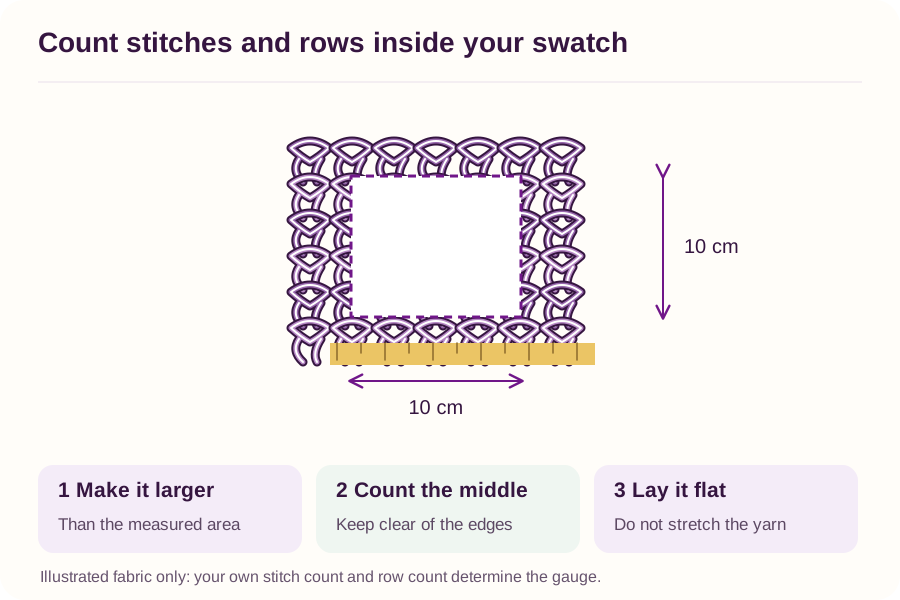
Select the diagram to open it at full size. Use the written steps for the actual hook movements.
Words you’ll meet
No need to memorise these. Keep them nearby and look up a word whenever you need it. This guide uses UK names, with US equivalents explained.
Open the plain-English word guide · 5 terms
UK dc / US sc
UK double crochet is called single crochet in US patterns. They are the same short stitch.
Swatch
A small sample used to practise or to check the fabric, stitch size and washing behaviour.
Gauge / tension
The number of stitches and rows in a measured area. Tension can also mean how firmly you hold the yarn.
Blocking
A fibre-appropriate finishing method that helps fabric settle into its intended shape.
Ease
The difference between body and garment measurements: extra room or, with stretch, a closer fit.
Quick note: this guide uses UK crochet names. UK double crochet is US single crochet.
Check the fibre first
Read the yarn's care label and test your method on a swatch. Different fibres respond differently to water and heat. For a first attempt, use a permitted cool-water method rather than steam. Heat can permanently damage synthetic yarn; do not press a hot iron onto your crochet.
A gentle wet-blocking routine
- If the label permits, wet or wash the piece gently. Support it when lifting so it does not stretch under its own weight.
- Press out water without wringing. Roll in a clean towel to remove more moisture.
- Lay on a suitable flat surface and ease to the intended measurements. Use rust-resistant pins if needed, keeping pins safely away from children and pets.
- Leave until completely dry before unpinning or moving it.
Keep expectations realistic
Blocking can settle stitches and open lace, but it will not add missing stitches or reliably rescue a badly sized garment. If heat or steam is involved, ask a capable adult to help and use fibre-specific guidance.
Sources & further learning
Checked 24 October 2026. Written in UK terms, with US equivalents where useful. Follow a project's own stitch key if it differs. These are original explanations and practice exercises, not copies of the linked publishers' patterns.