← Learn Crochet
Sign in to downloadRead free. Members can save a compact reading copy.

Learn Crochet · Beginner

Yarn 101: Which Wool Should I Pick? 🧶

Acrylic, cotton, merino, chenille — the yarn aisle is a rainbow jungle. Here's a kid-friendly guide.

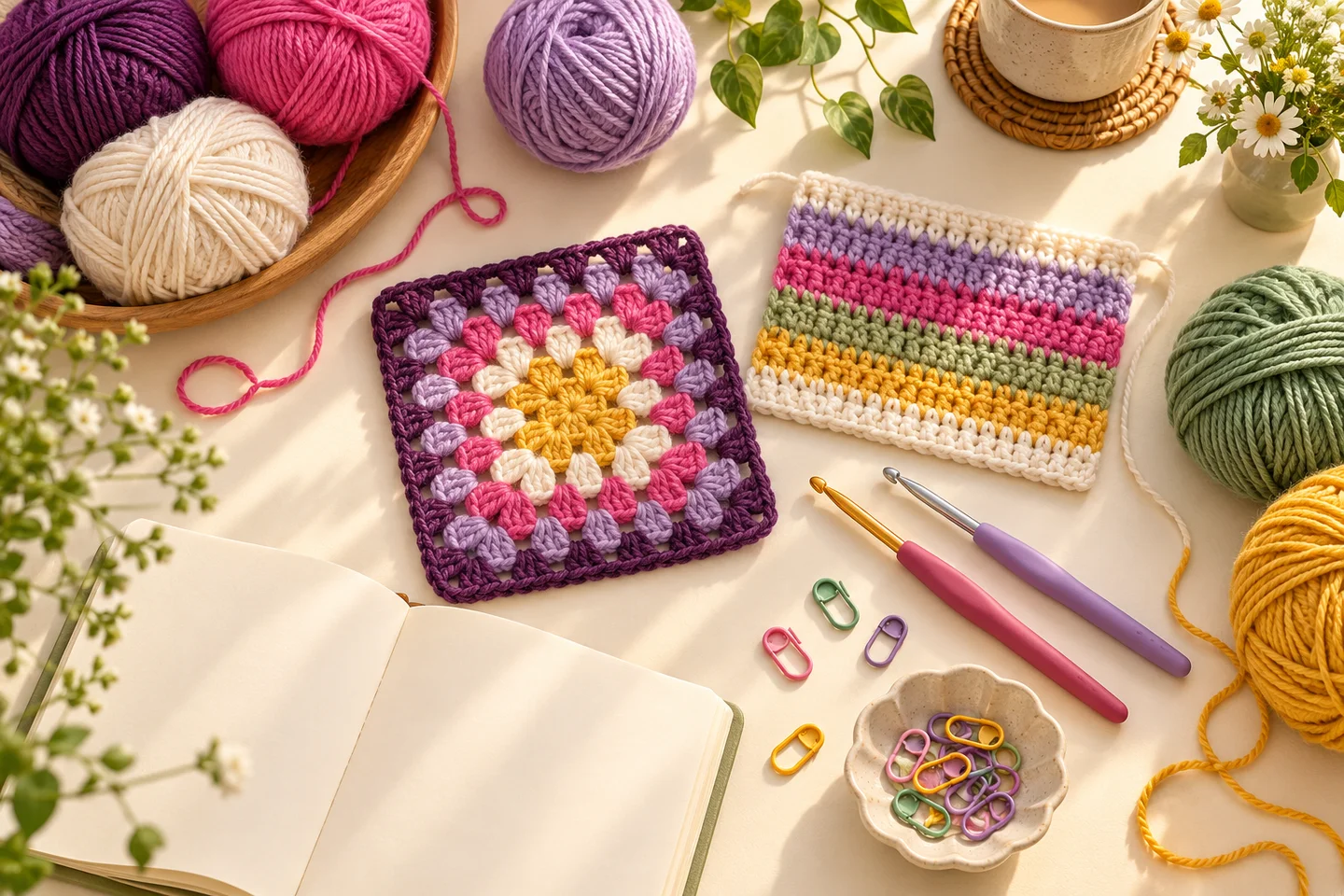
Crochet yarn and practice swatches — editorial illustration
Learn it. Try it. Make it yours.Illustration for inspiration; labelled teaching diagram below.

Start here · a little extra help

Not every yarn is wool

Yarn is the general name for the strand you crochet with. Wool is one fibre, normally from sheep. Cotton is a plant fibre, acrylic is synthetic, and blends combine fibres. The fibre affects stretch, feel, warmth and how the item should be washed.

For learning, a smooth, light-coloured yarn makes stitch tops easier to recognise than a fluffy or very dark yarn. Pick according to the project too: a floppy scarf and a firm little toy need different fabric. Check the label and make a sample before buying a large quantity.

Your small practice goal

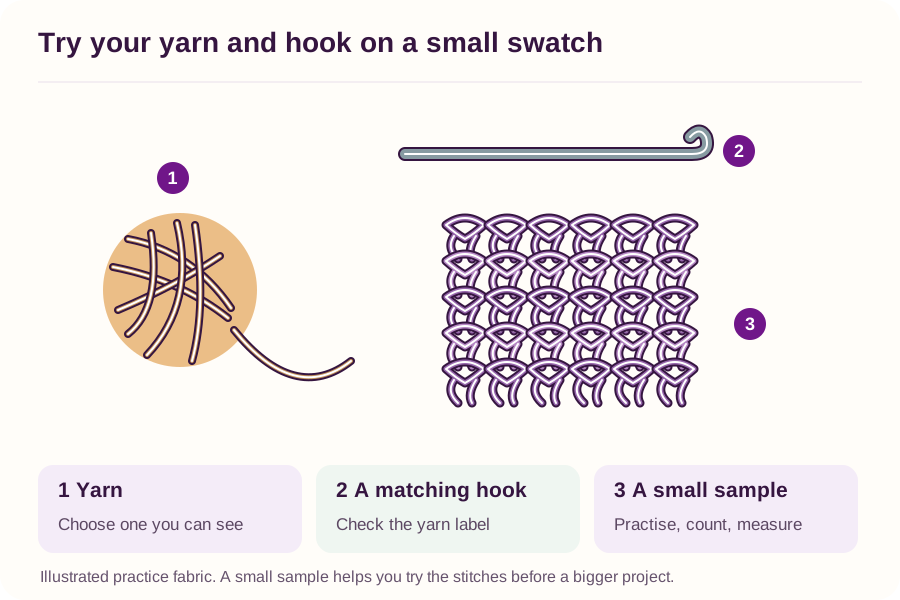
Compare two yarn labels. Find their fibre percentages and suggested hook sizes, then feel how the strands differ.

Picture it

A repeatable learning route: choose materials, make a small sample, check it, then begin the project. A small sample can save a lot of undoing.

Select the diagram to open it at full size. Use the written steps for the actual hook movements.

Words you’ll meet

No need to memorise these. Keep them nearby and look up a word whenever you need it. This guide uses UK names, with US equivalents explained.

Open the plain-English word guide · 4 terms

DK · double knitting

A yarn thickness name. Despite the name, DK yarn can be used for crochet.

Aran

A yarn thickness name, generally thicker than DK. Check the label and your gauge rather than relying only on the name.

Round · rnd

A complete trip around a shape. It may be joined at the end or continue in a spiral.

Amigurumi

Crocheted or knitted stuffed shapes and characters; many crochet versions use short stitches in rounds.

Full crochet A–Z · UK / US translation card

The yarn aisle is one of my favourite places in the whole world — but it can also be seriously confusing. Here's my friendly cheat-sheet to the most common yarn types and what they're best for.

Acrylic

Best for: beginners, plushies, blankets, anything you'll wash a lot.

Cheap, comes in every colour imaginable, and machine-washable. Brands like Stylecraft Special DK and Red Heart Super Saver are go-tos.

Cotton

Best for: washcloths, market bags, dishcloths, summer tops, amigurumi (stuffed toys).

Cotton has no stretch which makes amigurumi stitches look crisp and tidy. Slightly harder on your hands, but worth it.

Merino Wool

Best for: scarves, hats, mittens.

Soft, warm and a little bit fancy. Hand-wash only — don't put it in the washing machine or it'll shrink into a tiny felted potato. 🥔

Chenille / Velvet Yarn

Best for: super-cuddly plushies and pillows.

Looks gorgeous but slippery to work with, so save it for when you're more confident. Great for gifts!

Bamboo & Silk Blends

Best for: drapey shawls, fancy scarves.

Buttery soft and a little shiny. A treat for special projects.

Yarn weights — what do those numbers mean?

WeightCommon nameHook
1Lace / fingering2mm–3mm
3DK3.5mm–4.5mm
4Worsted / Aran5mm–6mm
5Chunky / Bulky6mm–9mm
6Super Chunky9mm–15mm

My top tip? Always read the ball band (that paper label around your yarn). It tells you the weight, the recommended hook size, and how to wash it.

Happy yarn-hunting! 🌈