Give each marker a purpose
A marker is useful only if you know what it is telling you. One can mean “first real stitch”, another “change colour here”. If you use several colours, write a short key in your notes. Removable locking markers or short loops of contrasting yarn work well in crochet because you can take them out without cutting your fabric.
Protect the two ends of a row
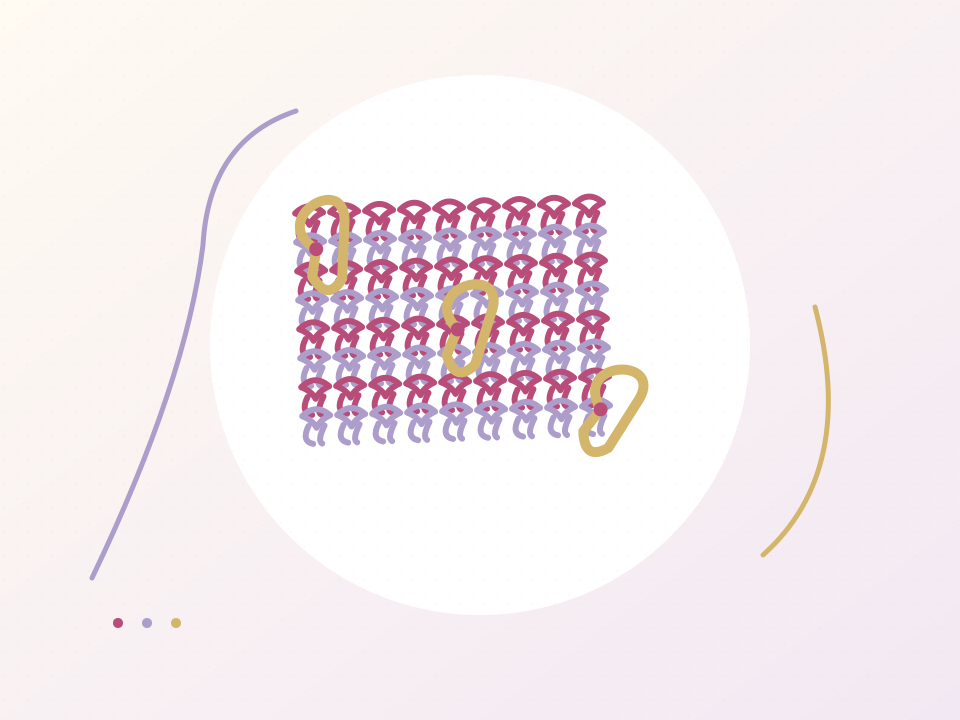
- After making the first stitch, clip a marker through its top loops. Make the rest of the row.
- Mark the final stitch as well. Count the stitches between the two marked tops, including both ends.
- On the return row, work into each marked edge stitch when you reach it. Move the markers into the new edge stitches, rather than leaving a trail of old markers behind.
Count a long foundation in groups
For a long chain, place a marker after every ten or twenty completed chains. Count from the previous marker rather than from the start each time. Do not include the live loop. When working the first row, remove each marker as you reach it so it cannot become trapped inside a stitch. Check the full row count once the stitches have been made.
Use a different system in a spiral
In a continuous round, mark the first real stitch and move that marker up when you begin the next round. Do not treat the marker itself as a stitch or add a joining slip stitch unless the pattern requests one. If you stop midway through a round, also write the round number and the last completed repeat. A marker alone cannot remember both.
Words in this lesson
Repeat marker
A marker identifying the boundary of a group of instructions.
Live loop
The unfinished loop on the hook; it is not a completed stitch to count.
Notes & further reading
Original explanations and practice exercises by Crochet By Micky. UK stitch names are used; check the stitch key in any other pattern you follow.
Reviewed 25 October 2026. Cover artwork is an original illustration, not a third-party pattern or event photograph.