Meet the ridge
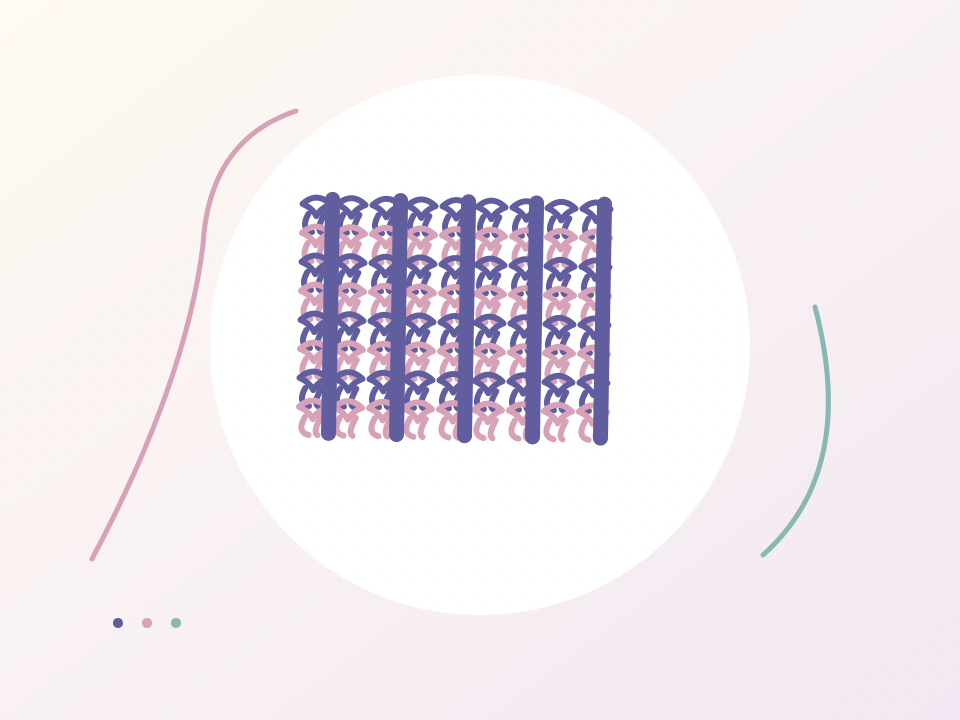
Back-loop-only crochet uses just the farther strand of a stitch’s top V as you look at it while working. The unused front strand forms a visible line. Repeating this in rows of UK double crochet, called US single crochet, creates a ridged fabric. Its stretch and recovery depend on the yarn and gauge, so a rib is not automatically suitable for every cuff.
Make an original twelve-stitch sample
- Chain 13. Starting in the second chain from the hook, make one UK double crochet in each chain: 12 stitches.
- Chain 1 and turn. This turning chain does not count as a stitch. Make one double crochet in the back loop of each of the 12 stitch tops.
- Repeat that back-loop row several times, keeping 12 stitches in every row. Mark the first and last stitch if you lose the edges.
Compare two directions
Lay the strip down without stretching it. Gently open it across the ridges, then along them, and notice the difference. A ribbed band is often constructed as a narrow strip with rows running around the body part, then joined at its short ends. Measure and test the actual sample before deciding the length; do not assume a fixed percentage of stretch.
Find a missed loop
If one ridge disappears, inspect the corresponding row for a stitch worked through both loops. If the edges are shrinking, recount the two marked ends rather than blaming the back-loop technique. Save the sample with a note of the hook, yarn and relaxed measurements. Those notes make it useful when planning a future band.
Words in this lesson
BLO
Back loop only: use the farther strand of each top V.
Recovery
How well stretched fabric returns towards its original size.
Notes & further reading
Original explanations and practice exercises by Crochet By Micky. UK stitch names are used; check the stitch key in any other pattern you follow.
Reviewed 25 October 2026. Cover artwork is an original illustration, not a third-party pattern or event photograph.