
Locate the body first
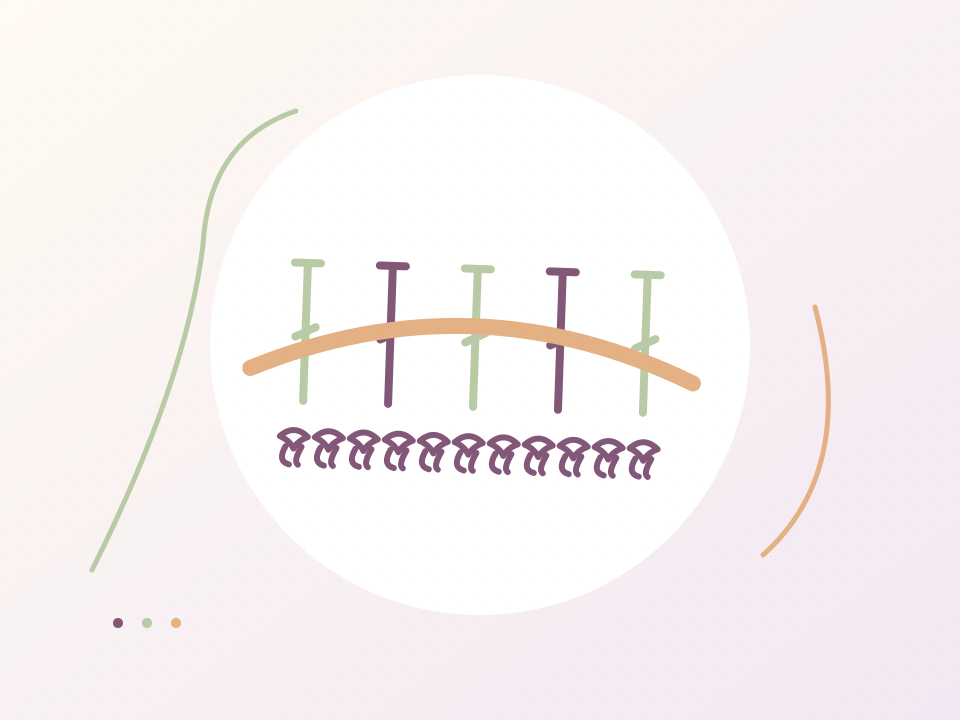
Make a small sample of UK trebles and identify the upright bodies below their top Vs. Those bodies are posts. For the practice described here, make a UK treble around a post instead of into a top stitch. It is called a post double crochet in US terminology because the ordinary stitch names are different.
Follow the hook’s route
- For a front-post stitch, yarn over, take the hook from the front through the gap beside the target post, pass behind that post and bring the tip out through the gap on its other side.
- Catch the working yarn and draw up a loop around the post. Complete a UK treble: yarn over and pull through two loops, then repeat that pull-through.
- For a back-post version, approach from behind, travel in front of the post and return behind before drawing up the loop. Complete the same tall stitch.
Do not count the post and its top twice
The new stitch normally replaces one ordinary stitch position. Unless a pattern specifically asks for an increase, do not also crochet into that post’s top V. Mark the chosen post on the sample before starting so it is clear which top belongs to it. Edge stitches may still be worked normally; follow the row instructions.
Compare both faces
Work a few front-post stitches on a spare sample, then look at its reverse. Raised and recessed effects change with the viewing side. A ribbed pattern may alternate front- and back-post work to maintain its texture after turning. Keep your loops relaxed enough to reach around the body without dragging the row shorter.
Words in this lesson
Front-post stitch
A stitch whose hook route approaches a post from the front and passes behind it.
Back-post stitch
The reverse approach, starting behind the fabric and passing in front of the post.
Notes & further reading
Original explanations and practice exercises by Crochet By Micky. UK stitch names are used; check the stitch key in any other pattern you follow.
Reviewed 25 October 2026. Cover artwork is an original illustration, not a third-party pattern or event photograph.